Tree Walk Reflections
Joined by Raintree Arborist, myself and Syuhada designed and guided a tree walk around Kampung Attap, Kuala Lumpur.
As part of my project, Roots and Ruins, supported by the Krishen Jit Fund, the walk is an extension of her observations, meanderings, and photo walkabouts around the city of Kuala Lumpur. The larger framework of the project also includes a body of work that was exhibited at the ILHAM Art Show 2025 and later on, a reflective collection of zines as part of the artistic inquiry. It further looks at mapping socio-ecological aspects of significant historic trees in Kuala Lumpur, that defied the test of time, trees uprooted naturally, and unnaturally and trees exhibiting a sense of place.
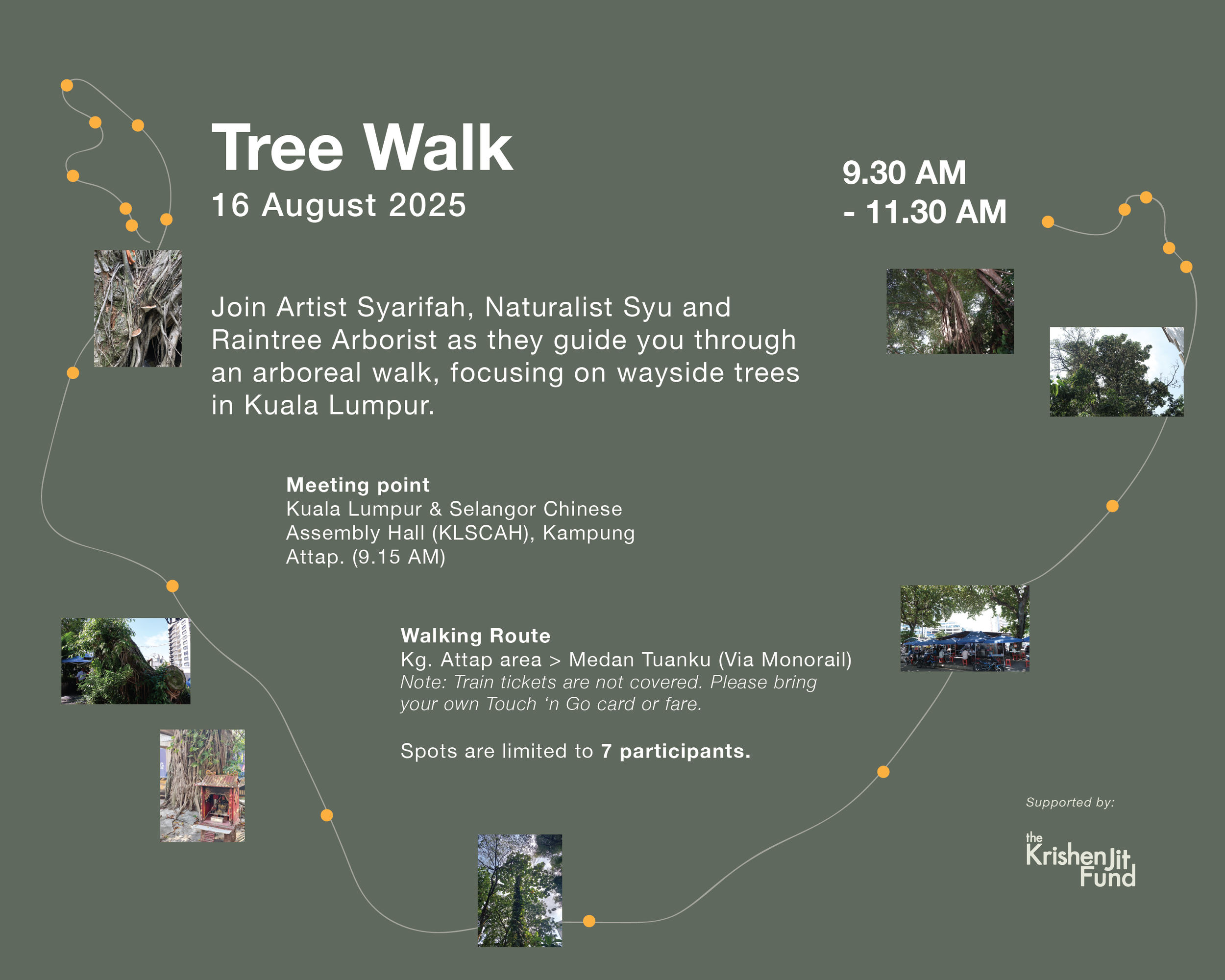
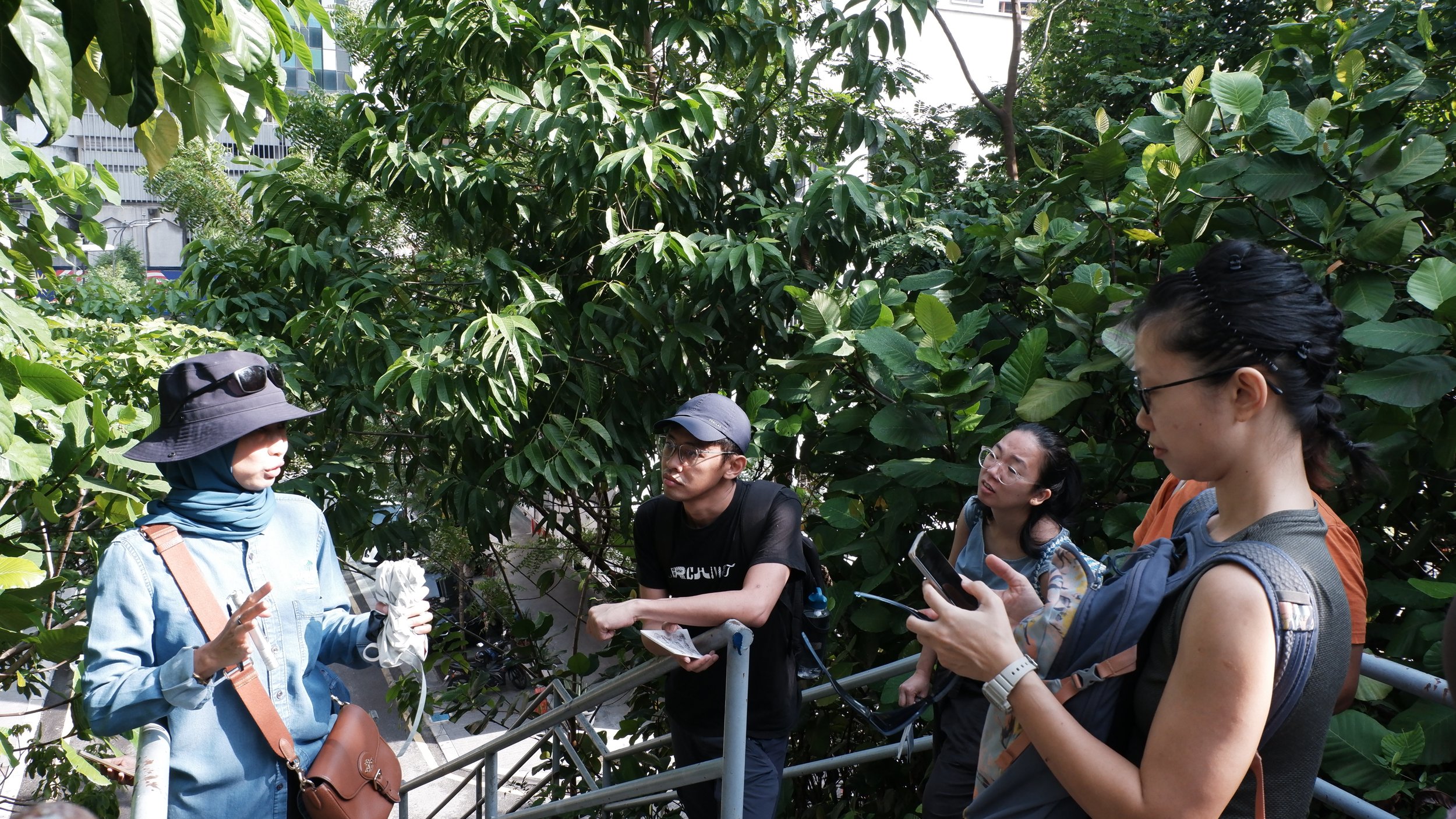
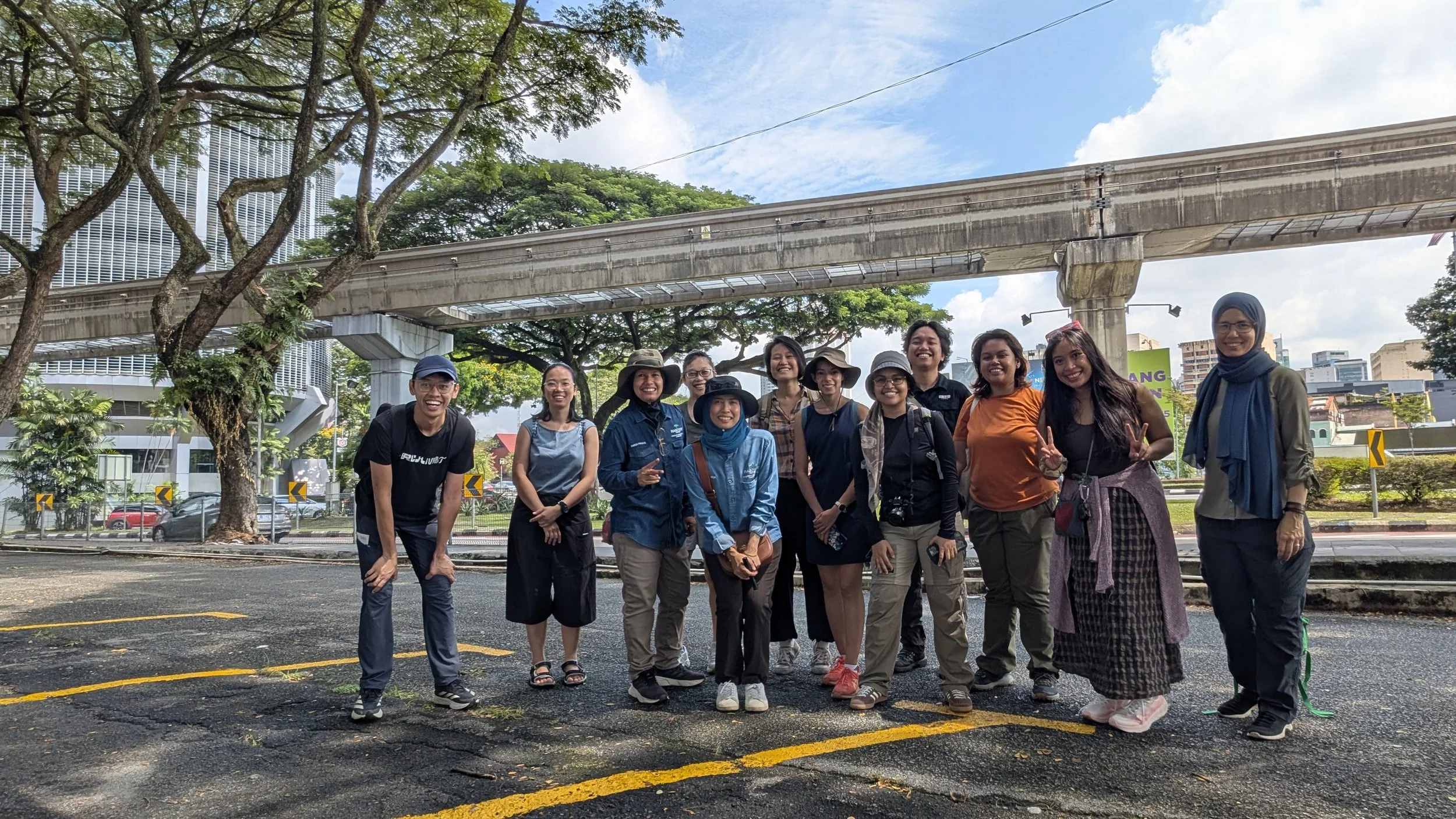
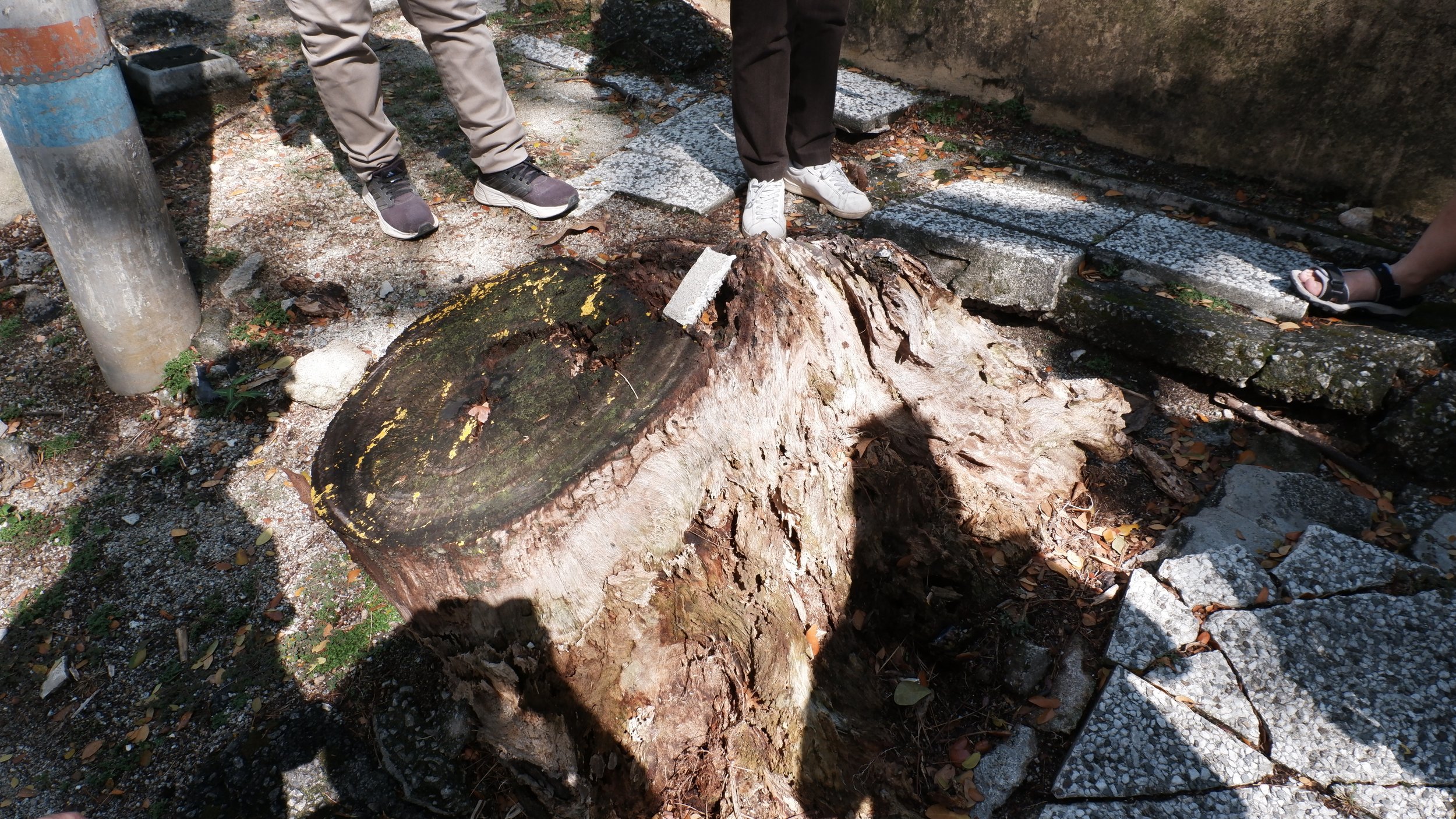
The walk began with a congregation under an Angsana tree in front of the Kuala Lumpur and Selangor Chinese Assembly Hall (KLSCAH). Puan Puteri of Raintree Arborist, followed by a group of 10 people, mostly consisting of artists, urban practitioners, educators and cultural workers, exchanged knowledge and recounted individual experiences about their relationships with trees. In a heavily concretized area, mature trees like Ficus and Angsana stand tall lining the streets. One particular old tree was already cut down and removed by the authorities as it was marked as hazardous, according to a conversation with Kedai Bawah Pokok restaurant owner.
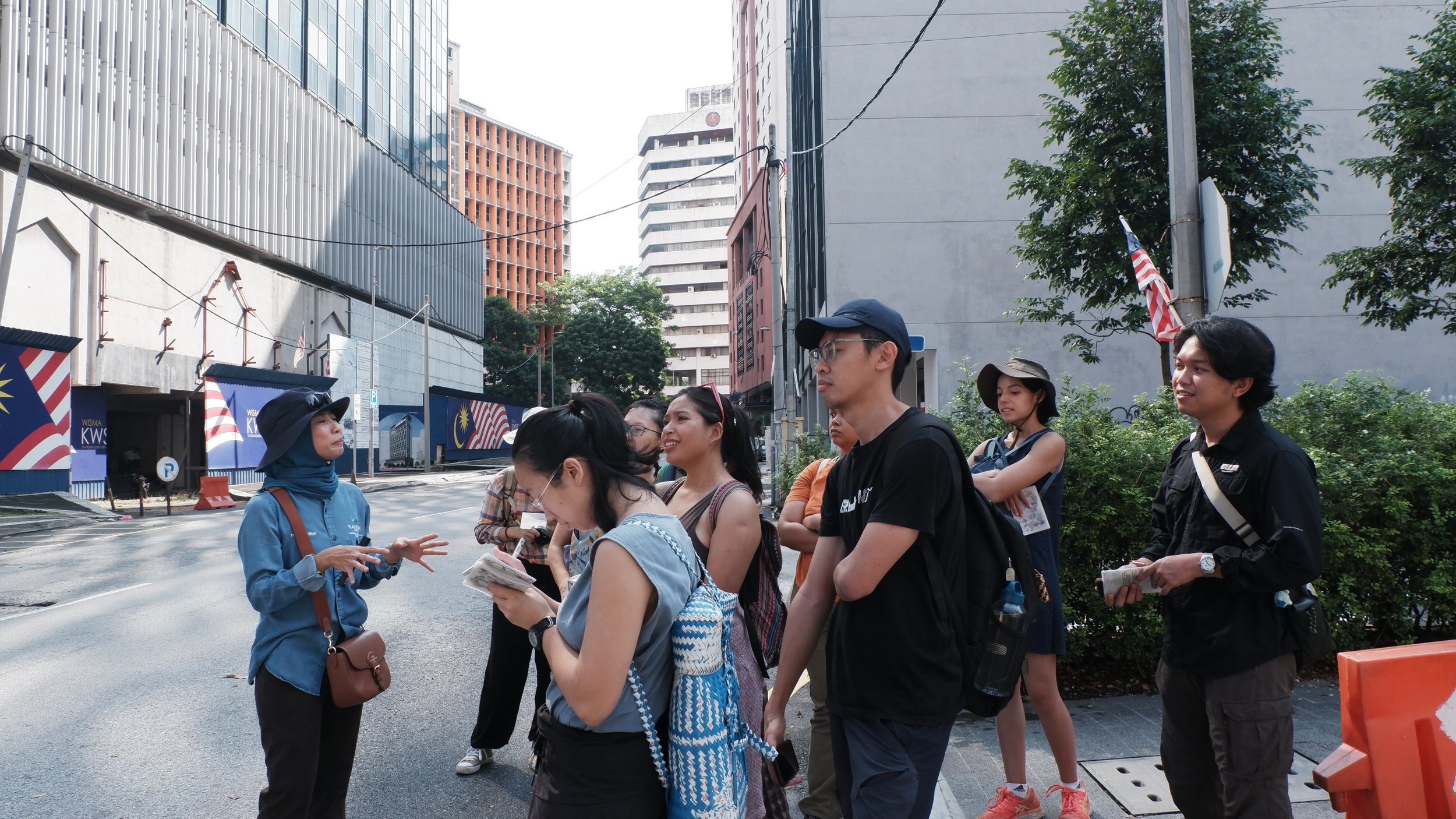
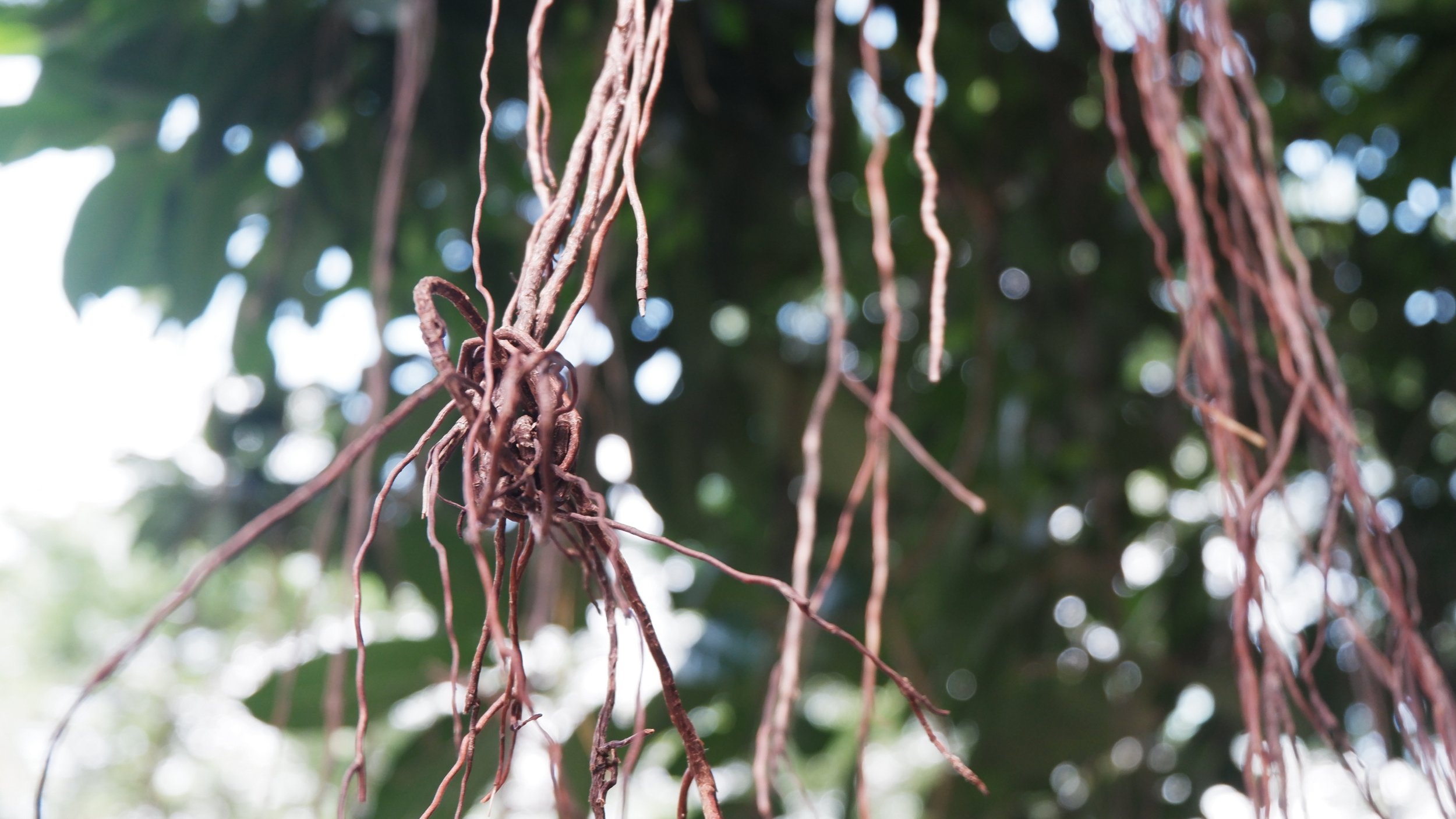
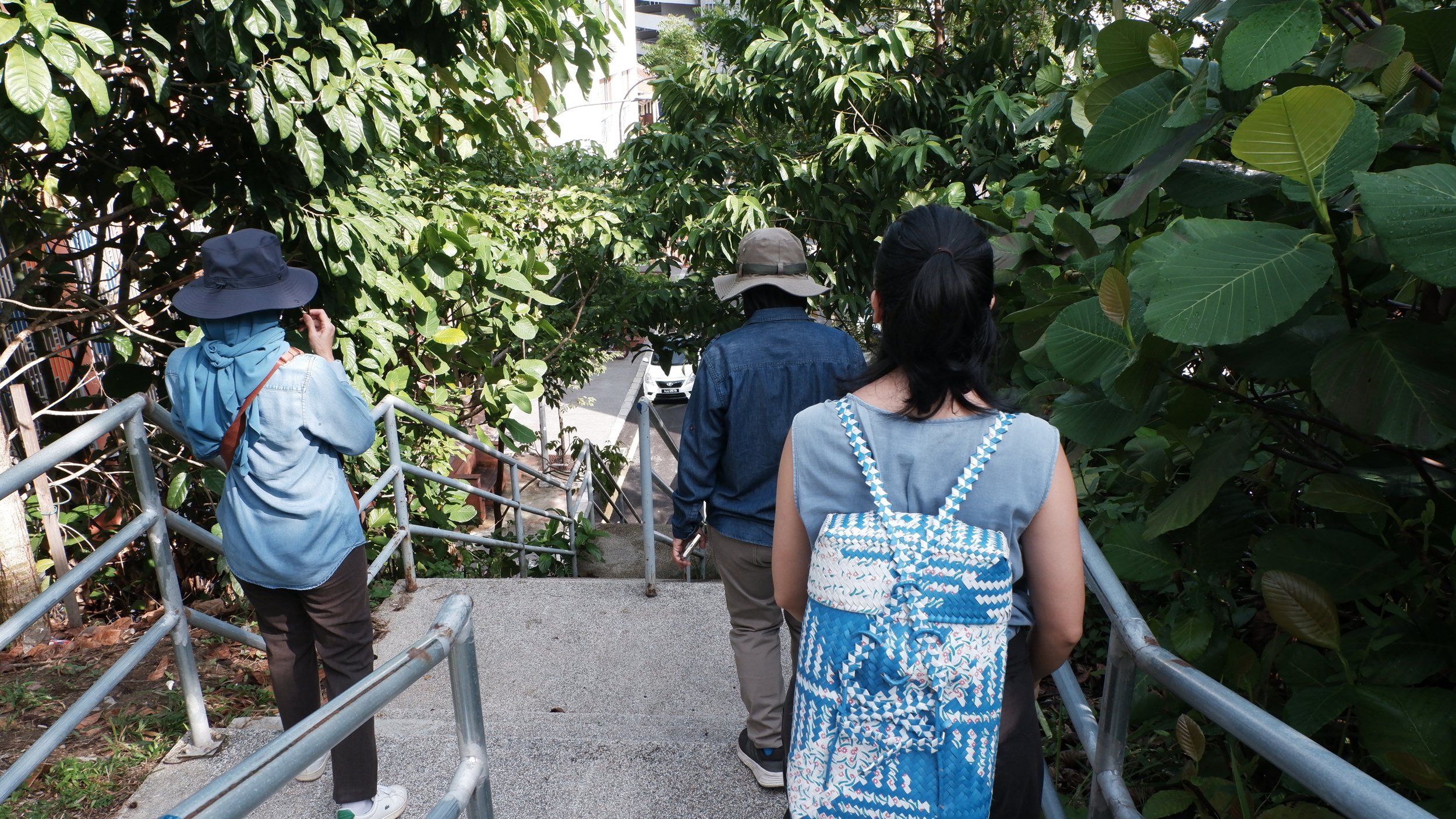
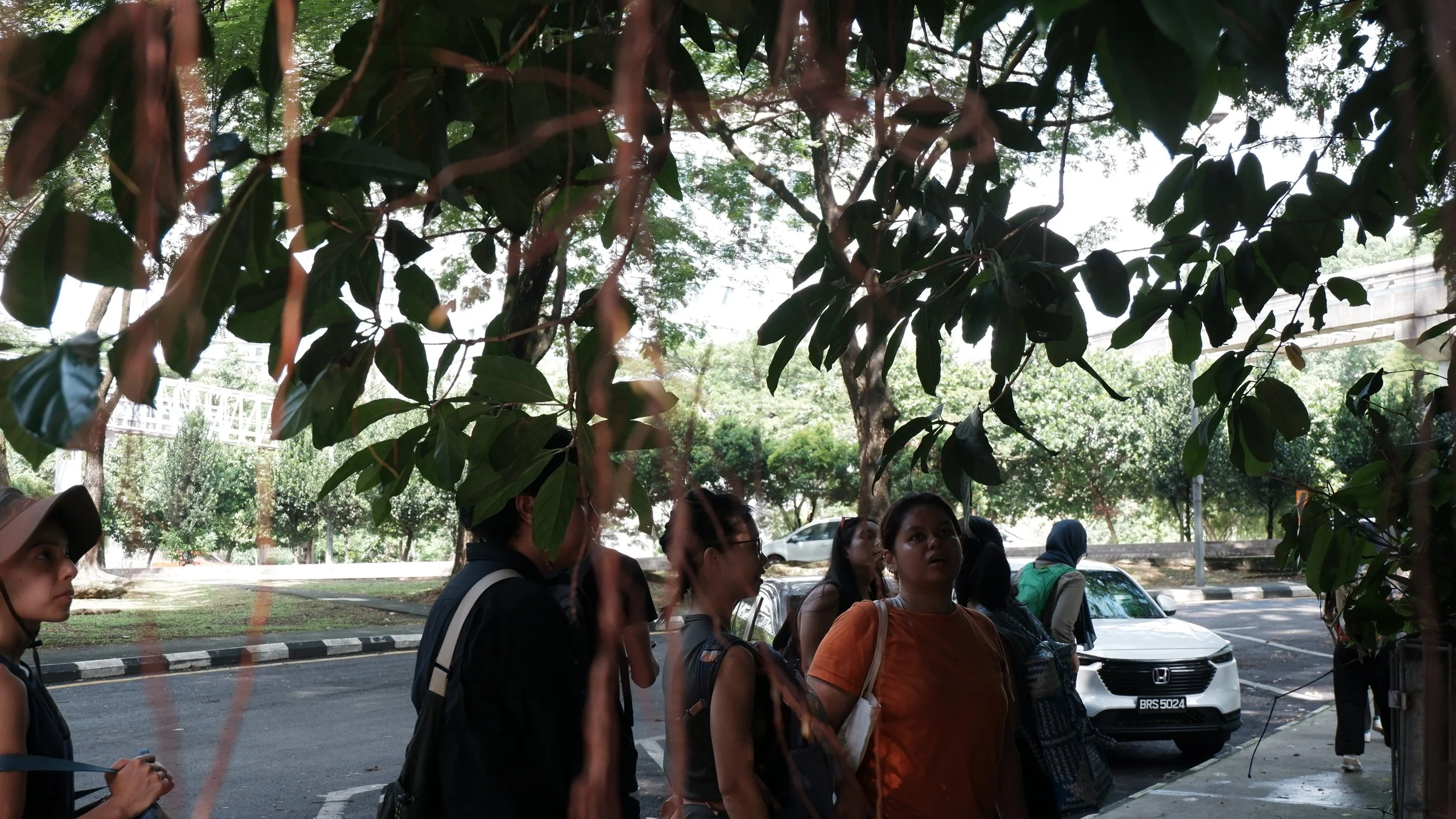
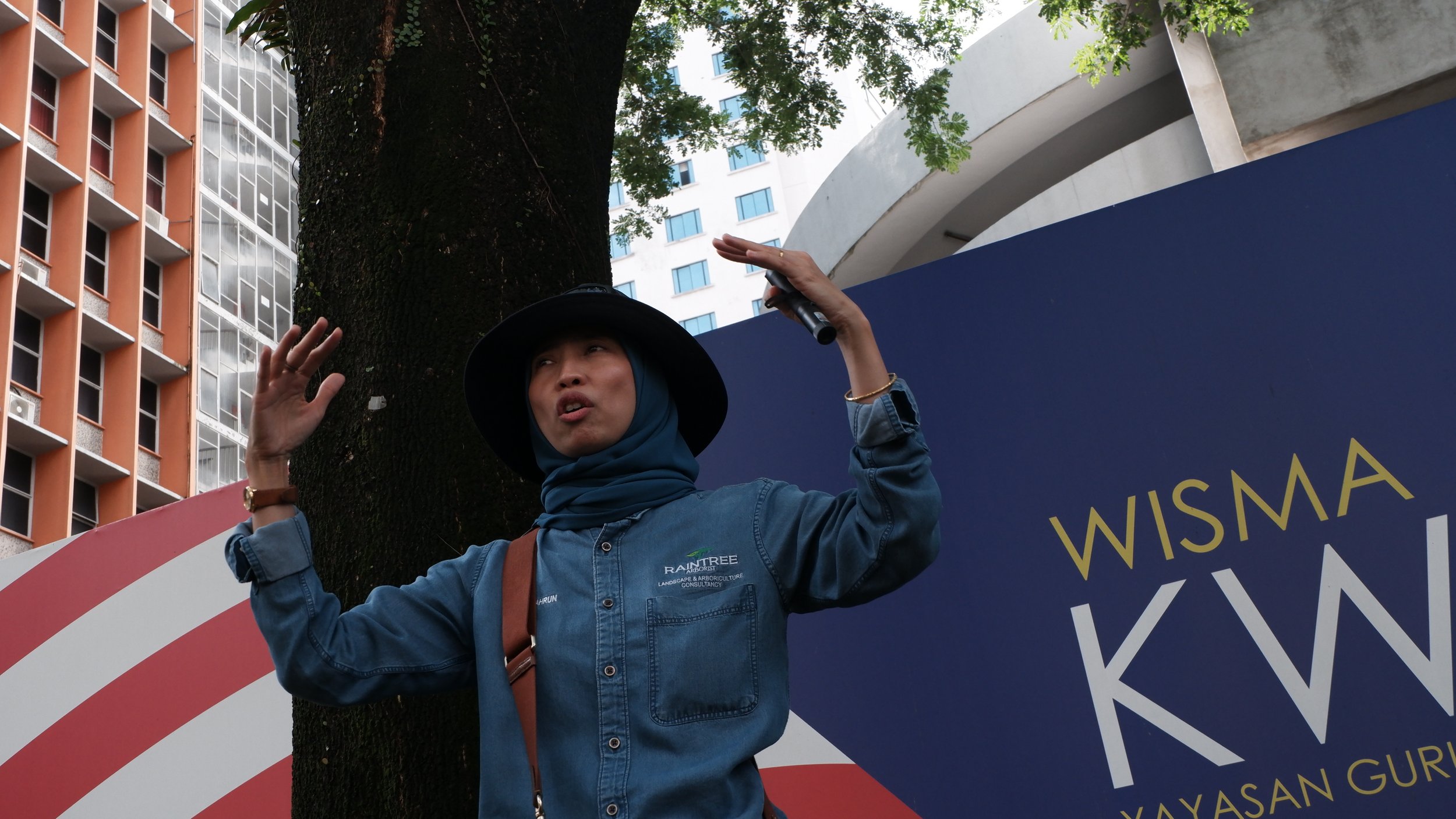
Syu interweaved the walk by sharing about the characteristics of pioneer species that tend to emerge in newly ‘replanted’ areas. Along the staircase towards the Zhongshan building, a small pocket of trees were pointed out including the Simpoh Air and Mahang.
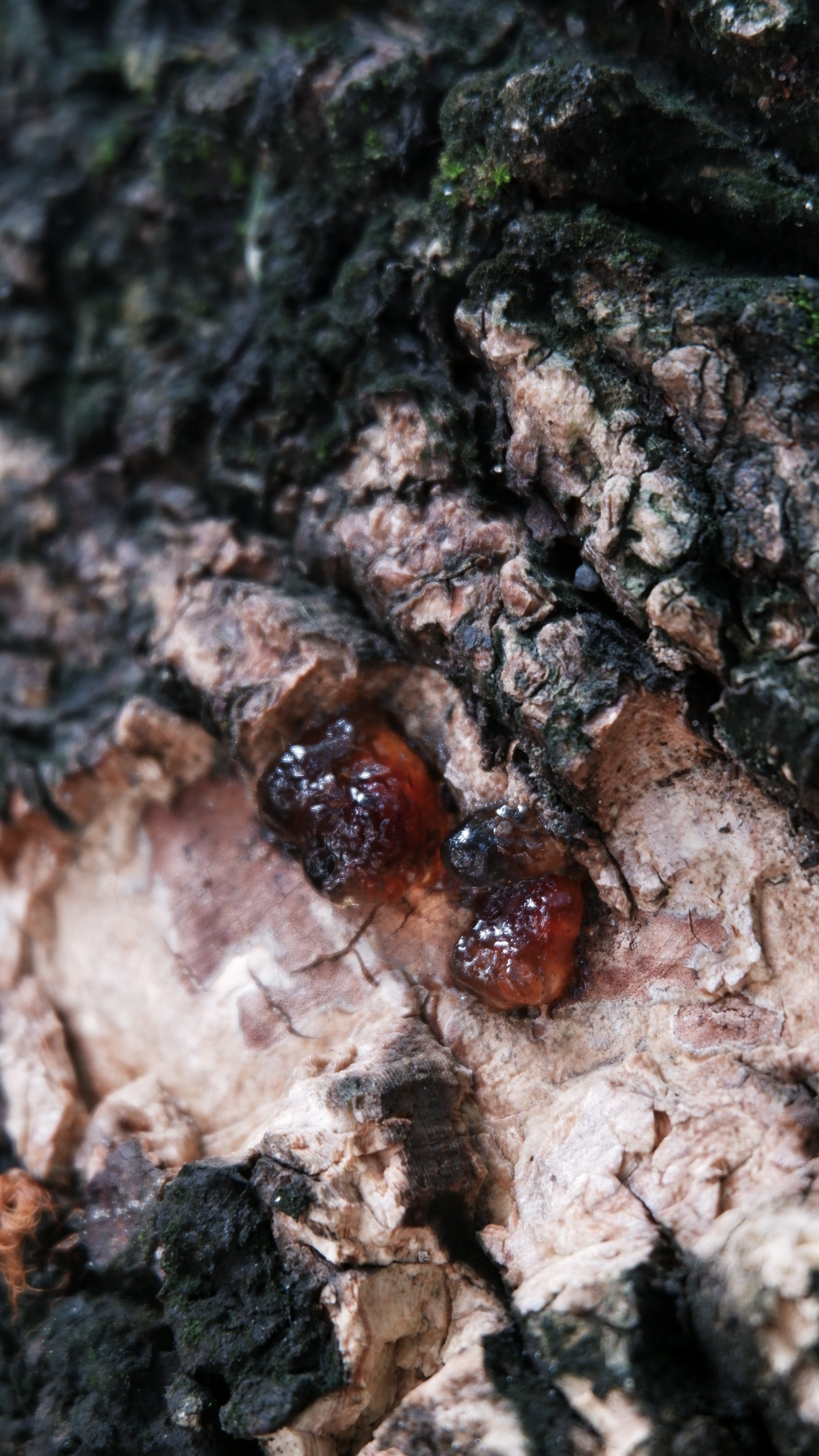
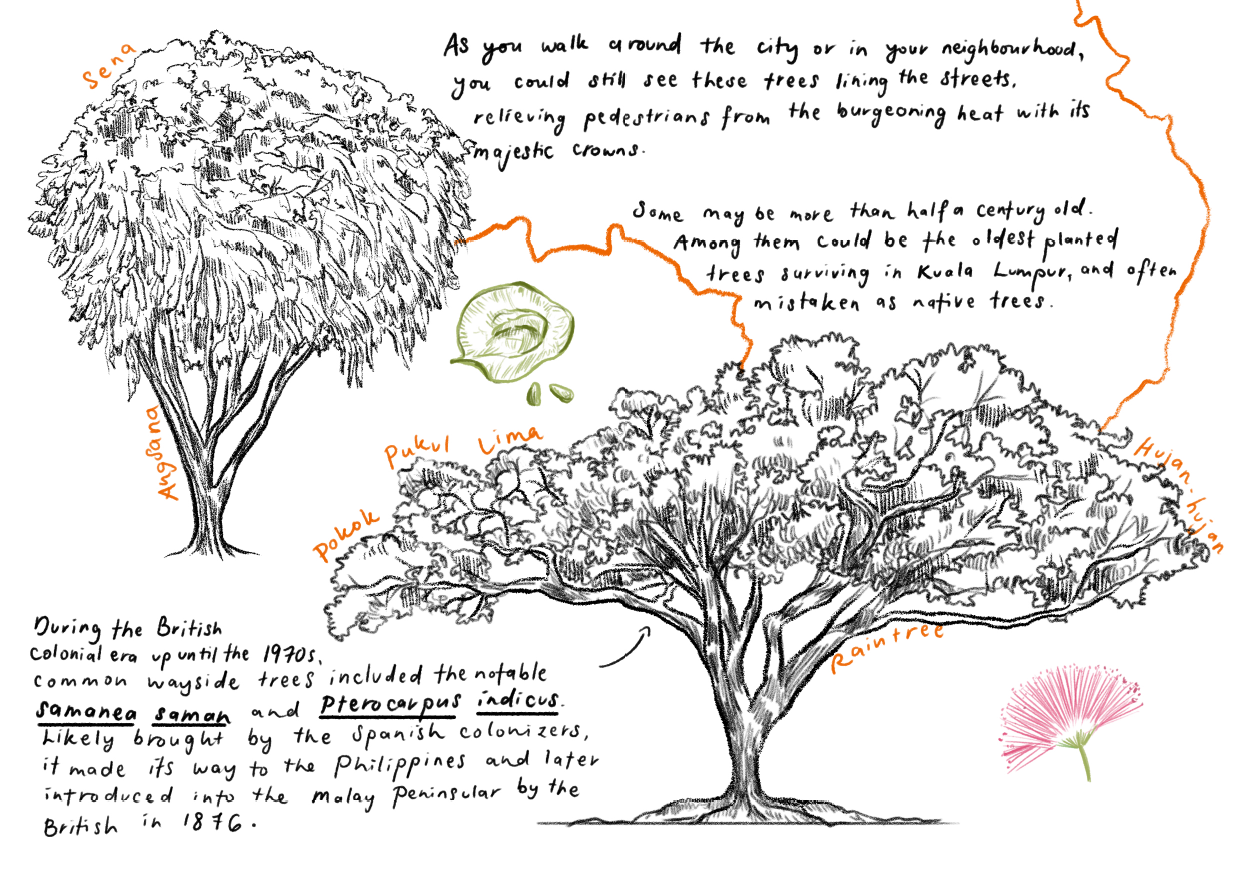
In an attempt to exercise my memory, I would engage in drawing as a method. Wayside trees tend to grow mighty and tall in urban enclaves, difficult to observe upclose unlike smaller plants and wildflowers. When inquiring about different tree species, Syuhada along with other ecologist-naturalist friends tirelessly shared their knowledge to an amateur like me. Some of the most common wayside trees found planted in cities like Kuala Lumpur are not even from Malaysia or the surrounding region. In this zine below, some of the oldest planted trees include the Raintree and Angsana, living up to 100 years or more. With care and attention, these trees grow tremendously.
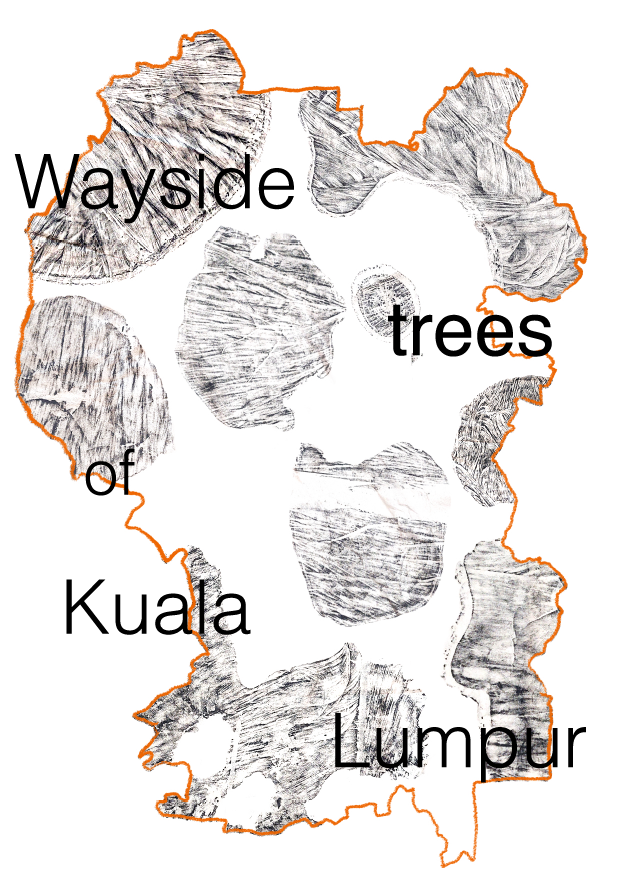
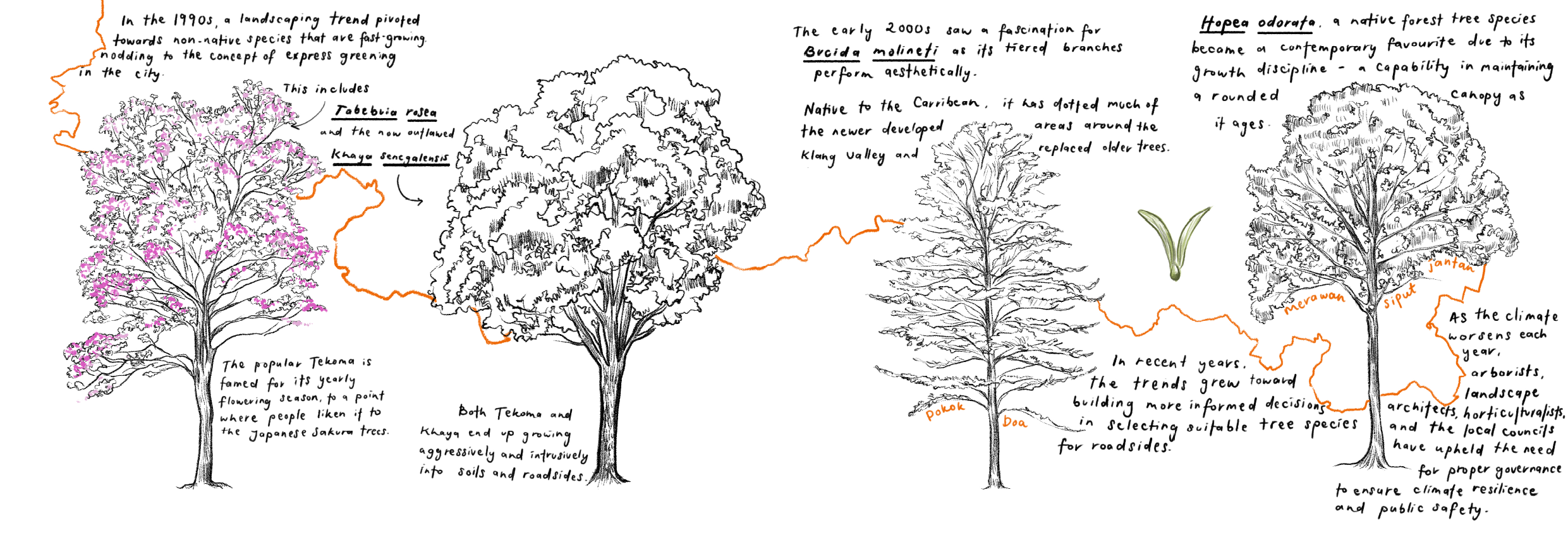
However, rapid urbanization forces city design and planning to favour concrete over greenery, profit over people’s comfort. The changes of tree species trends also inform the kind of urban environment the State is building or constantly reimagining. Over the past decade, more appreciation is shown towards native trees. Borrowing the title from E. J. H. Corner's Wayside Trees of Malaya (first published in 1940), the zine documents the changing trends and a mapping of those deliberate preferences.